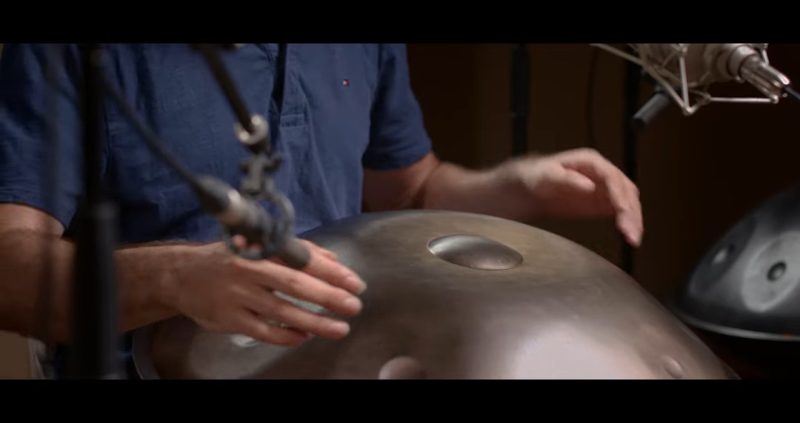
In this video, I outline my 11.1.6 Dolby Atmos monitoring system, a 19-channel loudspeaker array designed to support immersive audio mixing and mastering with an emphasis on translation, consistency, and perceptual accuracy across formats.
System overview
The monitoring system consists of:
-
Main level (11 channels): Lipinski L-707
-
Low-frequency effects (LFE): Two Lipinski L-150 subwoofers, summed to a mono LFE channel
-
Height layer (6 channels): Lipinski L-50
The main layer channel layout is configured as:
L, C, R, LW, RW, LS, RS, LS2*, RS2*, LRS, RRS
The height layer is configured as:
LTF, RTF, LTM, RTM, LTR, RTR
*LS2 and RS2 are calibrated as part of an array with the primary surround channels (LS and RS). This mirrors standard practices on large theatrical re-mix stages, where surrounds are deployed and tuned in arrays rather than as discrete point sources. The intent is to improve predictability when immersive mixes are adapted for cinema-oriented playback environments.
Design considerations
All loudspeakers in the system are Lipinski models, selected for tonal consistency across the array and suitability for critical listening. Maintaining a coherent voicing between the base layer and height channels was a central consideration in the system design, particularly for assessing vertical localization and envelopment without relying on compensatory processing.
Amplification and system control are treated as integral components of the monitoring chain. The front left and right channels are actively driven, while the remaining passive monitors are powered by multi-channel amplification selected for stability and headroom rather than coloration. Timing alignment, phase coherence, and level calibration are managed using Trinnov processing, which becomes increasingly critical as channel count increases.
Practical goals
The purpose of this system is not spectacle, but reliability. It is designed to support long-form mixing and mastering sessions at moderate listening levels, allow precise evaluation of spatial relationships, and facilitate decisions that translate across a wide range of playback environments—from large-format immersive systems to consumer headphones and stereo fold-downs.
Loudspeaker systems are inherently personal tools, and this particular configuration supports careful, detail-oriented decision-making that I have come to trust.


Justin Gray is an award-winning mix engineer, mastering engineer and producer based in Toronto, Canada. He works with artists from around the world in a wide range of musical styles, in his world-class facility equipped for stereo and immersive audio music production.
Don't miss a beat
Sign up to receive Justin Gray Sound’s email newsletter — featuring the latest educational videos, product reviews, and all things immersive audio.