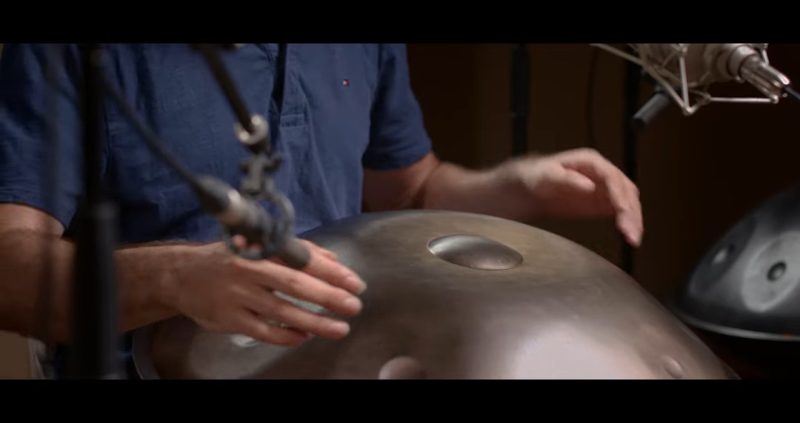
After an intense and inspiring day in the studio, we dove deep into the world of immersive percussion recording using an 11‑channel Schoeps array (MK 4s, MK 4V, and more), exploring how this setup can live inside a jazz and pop overdub context. The heart of the session was the Cuban Batá drums—the sacred three‑drum ensemble of okónkolo, itótele, and iyá—performed by my brother Derek Gray and Adam Teixeira, both of whom have spent years in Cuba studying with Batá masters. Our goal was simple but ambitious: to capture the true language of these three voices in a way that feels powerful, authentic, and fully immersive to the listener.
We spent a lot of time carefully positioning the Batá around the array—wide surrounds and center—so that the spatial relationship of the players mirrors how you actually experience Batá in the room. The main character is the array itself, with spot mics (Schoeps MK 41s and AKG 414s in hypercardioid) used like classical orchestral spots to bring out transient detail when needed, while preserving the natural spatial image.
Once the core Batá performance was locked in to a click, we pushed the concept further—using the same immersive array to build an overdubbed percussion ensemble that feels like 20 or more players surrounding the listener. Layer by layer, we added instruments like caixa, multiple tambourines, an array of hand shakers in different sizes and tonalities, and chékere, all while treating the array as the main “instrument” for space and realism. At one point, my brother and I climbed up on chairs and a ladder to perform directly into the height channels, using shakers, goat nails and other textures to create a native vertical layer of percussion—hyper‑real, intentional, and deeply musical.
The result is a session with 20+ layers of percussion on top of the Batá, recorded at 96k through Millennia and Digital Audio Denmark converters in a beautifully quiet room, leaving us with a massive yet surprisingly clean canvas. Even with all array channels at unity and no real mixing yet, it already feels like you’re standing in the middle of a live percussion circle—no heavy noise buildup, just clarity, depth, and the sensation of being in the room.
This experiment has completely reshaped how I think about overdubbing in an immersive context: instead of the classic “single shaker, pan it left/right” approach, we now have the ability to construct a full, flexible ensemble around the listener—while still keeping all the advantages of modern production: editing, splicing, rhythmic manipulation, and sculpting reverb and focus via the spots. There’s a lot of discovery and mixing still to come, but this session already feels like a proof of concept for how immersive arrays can serve a musical vision in a deeply human, emotionally direct way.


Justin Gray is an award-winning mix engineer, mastering engineer and producer based in Toronto, Canada. He works with artists from around the world in a wide range of musical styles, in his world-class facility equipped for stereo and immersive audio music production.
Don't miss a beat
Sign up to receive Justin Gray Sound’s email newsletter — featuring the latest educational videos, product reviews, and all things immersive audio.