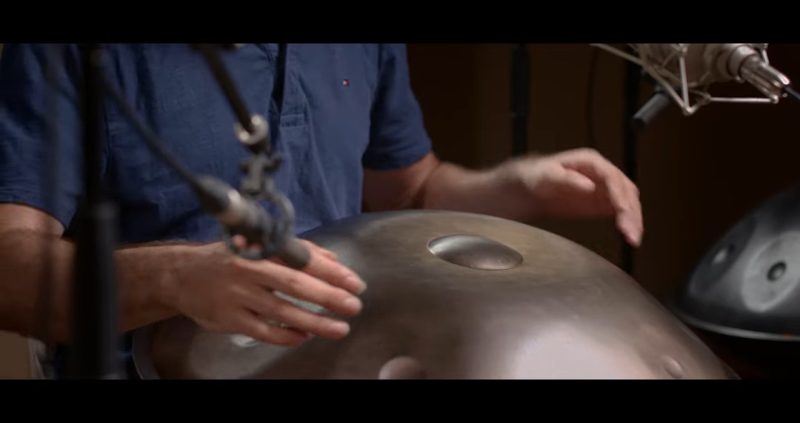
In this episode of Mixing IMMERSED, I take you inside the Dolby Atmos mix for “Beyond”, the second track from my album Immersed, recorded and mixed at Humber College’s immersive studio. This music was composed from day one for immersive audio – every chord, melody, and texture was written with spatial intent, then captured using dedicated multi-mic arrays on every instrument so the mix could truly come to life in 9.1.6.
“Beyond” is rooted in Hindustani (North Indian) classical music, drawing on the raga Charukeshi and its relationship to a sustained drone. We start by unpacking the opening texture: tanpura, guitar drones, and organ, all recorded with close mics plus layered immersive arrays of Neumann and DPA microphones to recreate the feeling of sitting on stage, enveloped in resonance. From there, we move into the core ensemble: tabla orchestrated around the listener, a brass quartet and bass trombones wrapping behind you, string quartet across the front, and featured soloists—voice, sarod, sarangi, saxophone, guitar, piano, and synths—anchored and then expanded into the room with natural ambience.
Throughout the video, I break down how I use a hybrid analog–digital workflow in Pro Tools with Dolby Atmos: routing individual instruments into 9.1.6 aux busses, using objects strategically (rather than a single master bed), and shaping space with tools like Density, Stratus, Symphony, Blackhole Immersive, and more. I also show how I capture real immersive reverb at source—playing back solos into the Aga Khan Museum concert hall and recording multi-channel ambience—so that the soloists bloom naturally into a real acoustic space instead of relying solely on plug‑in reverb.
Rather than adapting a stereo mix to Atmos, Immersed was conceived as an immersive work: the listener is placed at an impossible “sweet spot,” surrounded by an ensemble that plays from in front, beside, behind, and above, while still feeling coherent and musical. In this breakdown of “Beyond,” I walk through mic placement, object and bed strategy, low-frequency design, decorrelated drones and percussion, and how all of these decisions support the composition itself—so that what you hear in Atmos is not just a mix, but the actual intended form of the music.

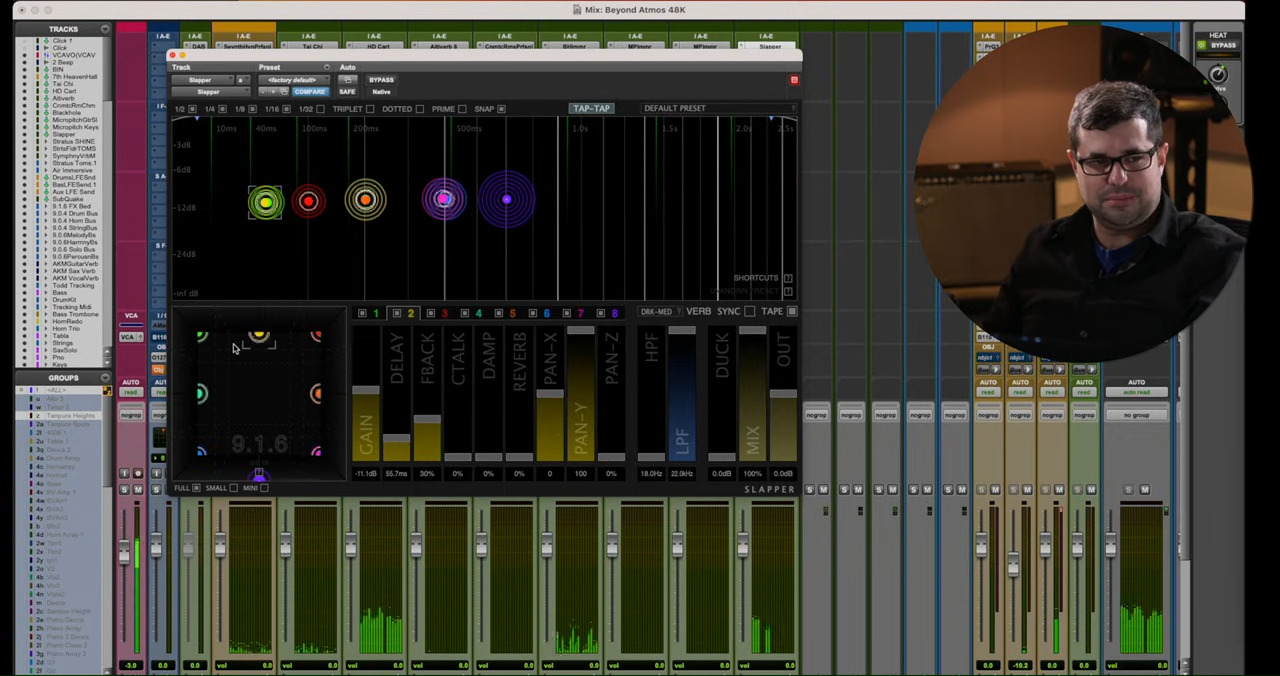

Justin Gray is an award-winning mix engineer, mastering engineer and producer based in Toronto, Canada. He works with artists from around the world in a wide range of musical styles, in his world-class facility equipped for stereo and immersive audio music production.
Don't miss a beat
Sign up to receive Justin Gray Sound’s email newsletter — featuring the latest educational videos, product reviews, and all things immersive audio.